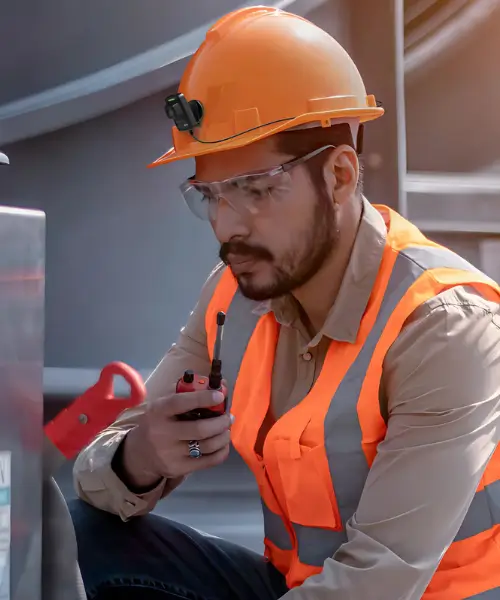

In modern frontline work, capturing the right footage at the right moment is essential. Whether in policing, inspection, emergency response or public safety, having a visual record supports both immediate decision-making and later evidence review. The way that footage is captured, however, can make all the difference to its value.
Some situations demand a camera presence that is less visible and less intrusive. In sensitive or covert operations, the overt appearance of a standard body camera can alter the behaviour of those involved, escalate tensions, or even compromise the safety of the wearer. External mini cameras also take up less space and are less likely to interfere with movement or tasks, making them more comfortable to wear for extended periods. This combination of discretion and practicality makes them invaluable in a wide range of operational scenarios.
Discreet and Adaptable
Chest-mounted bodycams are effective for many tasks; however, their placement can make them vulnerable to obstruction from movement, protective gear, or close physical contact. They are also more noticeable, which can be a disadvantage in specific contexts.
External mini cameras offer an adaptable and discreet alternative. Compact, rugged and unobtrusive, they can be mounted on a helmet, shoulder, collar or even on the chest, depending on operational needs. Mounting a helmet provides an elevated first-person perspective that aligns closely with the wearer’s line of sight, ensuring a more precise and more consistent view of unfolding events.
Tailored to the Situation
In routine interactions, bodycams on the torso work well. In high-pressure situations such as riot control, however, they can be blocked or shifted. Mini cameras solve this by allowing more flexible positioning. When mounted on a helmet or shoulder, they maintain a stable and unobstructed perspective, even in crowded or physically demanding environments.
Where They Excel
Mini cameras are increasingly being used across sectors that demand mobility, discretion and flexibility. Mounted police and motorcyclists use them to capture a steady, elevated view in traffic and crowd management. Riot control units often rely on helmet-mounted mini cameras during confrontations, as protective gear can render chest-mounted cameras ineffective.
They also offer clear benefits in healthcare, where a collar-mounted mini camera is less intrusive for patients, as well as in engineering or inspection work in confined spaces. In covert or plainclothes roles, their small size enables effective documentation without drawing attention or restricting movement.
Real-Time and Secure
When paired with a 4G-connected system such as the ZEPCAM T3 Live, the mini camera becomes a powerful operational tool. The ZEPCAM T3 Mini Camera is IP68-rated, compact, and delivers high-quality video in all lighting conditions. It integrates seamlessly with the main bodycam, supporting both low-latency livestreaming and secure local recording.
This combination enables supervisors to monitor developments as they occur while also preserving footage for later review. Integrated GPS enriches the live feed with location data, improving coordination and situational awareness.
Enhancing the Bodycam System
Mini cameras do not replace bodycams; they expand their capabilities. By offering flexible positioning, a less intrusive presence, and a design that does not obstruct the wearer’s movements, they ensure that key moments are captured from the right angle in any scenario. Within an integrated and secure video system, they help teams operate more effectively, respond faster, and maintain accountability without compromising discretion.
The ZEPCAM T3 Live system, combined with the ZEPCAM Mini Camera, provides professionals in the field with the adaptability, clarity, and control they need to meet today’s operational challenges.
Discover how the ZEPCAM T3 Live system and ZEPCAM Mini Camera can enhance your operational visibility and effectiveness. Contact us for tailored advice and best practices suited to your organisation.