

The setting changes, but the basic role of the camera does not. It becomes relevant when routine public-facing work turns unsafe, disputed or difficult to oversee. The recording can show what the employee saw, heard and did at that moment.
1. Body cameras are no longer limited to policing
Police use made body-worn cameras widely recognisable. The same technology is now used in workplaces where employees deal directly with passengers, patients, visitors, customers or large crowds. These encounters are usually routine, but a delay, refusal, theft, medical emergency or access dispute can change the situation quickly.
Outside policing, a bodycam is generally a workplace safety and incident-recording tool. It is worn visibly and is commonly activated for a defined event rather than used to film an entire shift. This distinction matters because the aim is not continuous surveillance. The camera provides a reliable account when an employee faces aggression, needs assistance or must explain an incident afterwards.
2. Why organisations use body cameras
Organisations usually introduce bodycams because several practical problems meet in the same frontline role. Employees may work alone or far from a supervisor. Verbal or physical aggression can escalate before colleagues arrive. Afterwards, the people involved may remember the encounter differently.
Employee protection and de-escalation. A visible camera gives frontline staff an additional safety tool. Its presence, or the announcement that recording has started, can make people reconsider their behaviour. It supports de-escalation but does not guarantee it.
An objective record and real-time support. Video and audio provide a first-person account for incident review, complaint handling, reporting or evidence. With a live bodycam, authorised colleagues can also see and hear what is happening and decide whether help is needed.
3. Bodycam use in transport, healthcare, security and retail
Transport
Railway conductors, ticket inspectors and station staff regularly handle fare disputes, service disruption and passengers whose behaviour becomes aggressive. A bodycam gives the employee a visible way to mark the point at which a normal conversation has become an incident. The recording can later help the organisation reconstruct the encounter and respond to complaints or threats.
At Dutch National Railways (NS), chief conductors use ZEPCAM bodycams when interactions with passengers escalate. The ZEPCAM customer story describes stronger staff confidence and a perceived de-escalating effect as access expands nationwide. The practical use is straightforward: the conductor wears the camera visibly and activates it when an interaction escalates.
Healthcare
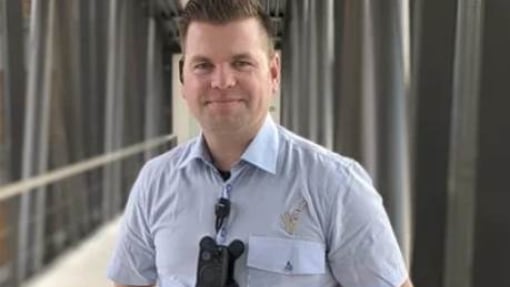
Hospitals are another public-facing environment in which frustration, distress or intoxication can lead to threatening behaviour. Here, bodycams are commonly worn by hospital security officers, not by nurses or other clinical staff. Security can activate the camera when responding to aggression, an unauthorised entry or another safety incident.
At Leiden University Medical Center, LUMC security employees use ZEPCAM bodycams as part of the hospital’s safety approach. The LUMC case study shows how the camera supports the security team in protecting employees and documenting incidents. The benefit for doctors, nurses and other hospital staff is indirect but important: security has a clearer record when it intervenes in a threatening situation.
Private security and events
Private security guards work in settings ranging from mobile patrols and industrial sites to events and public venues. Some roles mainly require local recording for evidence. Others need live contact with a control room because the wearer is working alone, covering a large site or dealing with a fast-moving incident.
ZEPCAM’s DeltaSafe Group customer story shows how live video, audio and GPS connect field workers with a control room. At the Eindhoven Marathon, selected staff used ZEPCAM bodycams to stream a first-person view to the command post. In one documented incident, the control team could assess a problem at a closed road without first sending someone to inspect it. The event case study also describes footage being used for evaluation and training.
Retail
Retail employees and store security teams may face verbal abuse, threats, shoplifting incidents and disputes at the checkout or exit. In this setting, a bodycam is usually worn by trained staff and activated when behaviour becomes threatening or an incident needs to be recorded. The visible camera may help de-escalate the encounter, while the footage gives managers and security teams a clearer basis for reviewing what happened.
For ZEPCAM’s retail applications, the focus is staff safety, incident documentation and secure handling of footage. Professional cameras, docking and evidence management connect the moment in the store with the organisation’s follow-up after the incident.
The same principles also apply in municipal enforcement, nature management, rescue services and other field operations. ZEPCAM customer stories include parking officers, Staatsbosbeheer rangers and KNRM maritime rescue crews, each using the body-worn viewpoint for a different frontline task.

4. What these applications have in common
Across all four sectors, bodycams are used at the point where the employee meets the public. The camera is close enough to capture the wearer’s perspective, but it remains only one part of the response. Staff still rely on training, escalation procedures and support from colleagues or a control room.
The recording also has a life after the incident. Footage may need to be transferred securely, viewed by authorised colleagues, linked to an incident report and removed according to the organisation’s retention rules. For live applications, the workflow starts earlier: someone in a control room must be able to watch the stream and act on it.
Shared pattern: a bodycam is introduced where public-facing work can become unsafe or disputed, and where an objective first-person record can support the employee and the organisation.
5. How ZEPCAM supports professional bodycam use
ZEPCAM supplies professional bodycams and the systems around them. Depending on the application, an organisation can use local recording for evidence or a connected bodycam for live video, audio and location data. Docking stations and ZEPCAM Manager support the transfer, storage and management of recordings after use.
That range is why the same platform appears in different working environments. NS uses ZEPCAM in public transport, LUMC uses it through hospital security, and DeltaSafe Group and the Eindhoven Marathon use live functionality to connect people in the field with a control room. Retail teams can use the same professional approach for staff safety and incident recording without turning the camera into an always-on surveillance device.
Professional bodycam use continues after the recording stops. ZEPCAM docking stations can charge bodycams and transfer footage from the devices into the organisation’s video environment. In ZEPCAM Manager, authorised users can manage cameras, user access and recordings through one Video Management System. ZEPCAM integrations can connect this environment with existing video, evidence and control-room systems. This makes the bodycam part of the organisation’s wider security and incident-management workflow, rather than a standalone recording device.
Explore professional bodycam applications: view ZEPCAM customer stories or browse bodycam use cases.
Sources
- ZEPCAM: customer stories
- ZEPCAM: bodycam use cases
- ZEPCAM: nationwide rollout for Dutch National Railways (NS)
- ZEPCAM: safer healthcare employees at LUMC
- ZEPCAM: private security
- ZEPCAM: DeltaSafe Group customer story
- ZEPCAM: Eindhoven Marathon event-management case
- ZEPCAM: bodycams in retail
- ZEPCAM: professional bodycam solutions
- ZEPCAM: ZEPCAM Manager