
Live-streaming body cameras are no longer just a policing tool – they’re fast becoming a critical asset for paramedics, firefighters, and frontline rescue teams worldwide. These compact devices transform emergency response from protecting personnel and documenting incidents to improving real-time coordination. In high-pressure situations where every second counts, body cameras provide vital eyes on the ground – offering instant support and more thoughtful decision-making, wherever and whenever needed.
What Kind of Challenges Do Emergency Rescue Teams Face?
Search and rescue missions are no walk in the park. These operations often cover huge areas, with small teams scattered about, trying to gather information while command centres are miles away. Multiple recent research reports flagged that social and environmental pressures made emergencies more frequent, complex, and challenging to manage.
Emergency teams no longer contend with natural disasters. Today, they face complex and unpredictable challenges, including terrorist incidents, security threats at significant events, and large-scale accidents. These accidents, which can range from devastating industrial explosions to mass-casualty transportation incidents, often require specialised disaster response forces beyond routine emergency services.
Take the 2024 wildfires in Los Angeles. Emergency services were pushed to the limit as fast-moving fires tore through multiple zones simultaneously. Firefighters, EMS units, and aerial support operated under extreme conditions with limited visibility and fragmented communications. A major gap was the lack of real-time data from responders on the ground, which slowed decisions and complicated coordination.
“Fires are moving faster than ever. Real-time coordination across teams isn’t a luxury anymore — it’s a necessity.”
– Chief Kristin Crowley, Los Angeles Fire Department (paraphrased from the LA Times, Oct 2024)
The shortcomings were apparent:
- Difficulty coordinating large-scale operations across multiple agencies
- Increased safety risks for responders and civilians
- Too few eyes on the ground
- Command centres operating with delayed or incomplete information
A similar pattern emerged during the 2019–2020 Australian bushfire crisis, when state fire departments, rural volunteers, and aerial support often worked blind to one another’s movements. Miscommunication and a lack of live data caused duplicated efforts and dangerous gaps in coverage.
“Too much chatter slows us down. We need clear, focused comms to get the job done.”
– Commander, New South Wales Rural Fire Service
How Can Live-Streaming Body Cameras Make a Difference?
Live-streaming body cameras have the potential to transform rescue operations. This technology can significantly improve the volume and quality of communication, leading to sharper decisions and faster support.
In emergencies, body cameras capture constant video, images, and GPS data – all transmitted directly to the central command post. This setup brings some serious advantages:
- Faster Situational Awareness: Immediate access to real-time information on the ground for better decision-making.
- Better Collaboration: Shared visual context streamlines communication and enhances coordination.
- Reduced Radio Chatter: Visual context and real-time data reduce reliance on verbal updates, reducing radio traffic and miscommunication.
- Improved Resource Allocation: Efficiently direct supplies and personnel.
- Enhanced Safety: Identify and avoid high-risk areas.
- Data-Driven Decisions: Make informed choices based on current conditions.
Let’s be clear—images and videos convey far more meaning than words, especially when lives are on the line.
Many teams are already using live-streaming drones to gain aerial insight. Adding body cameras to the mix gives a boots-on-the-ground perspective – the perfect pairing to enhance communication, coordination, and safety.
Smarter Response, Stronger Teams
Bodycams also transform every operation into a learning opportunity. The footage captures crucial details and enhances techniques during drills or real missions. Teams can review their actions from a first-person perspective, with tagged insights and feedback, to improve skills, coordination, and response times.
Bridging the Gap: ZEPCAM T3 in Action
The technology is here, it’s effective, and it’s continuously improving. Live-streaming body cameras transform emergency response by enhancing communication, accelerating decision-making, and increasing safety.
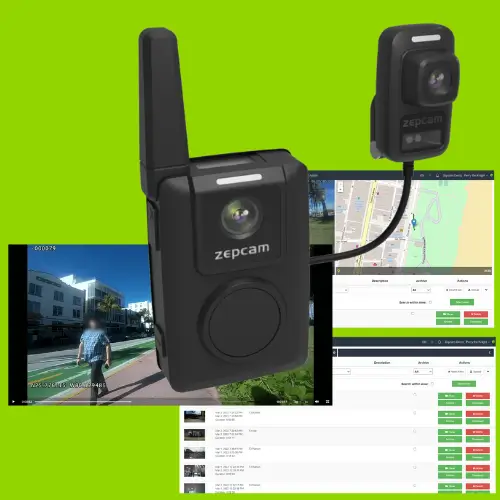
The ZEPCAM T3 live-streaming body camera combines these benefits in a compact, reliable device. It securely transmits real-time video, audio, and GPS data from the field to command centres, ensuring a shared operational picture when timing is critical. With built-in 4G/LTE, the T3 operates independently of local infrastructure—, making it ideal for mobile teams and remote deployments.
From fast-moving urban operations to large-scale incidents in rural areas, the T3 delivers stable, low-latency streams that keep teams connected. It integrates seamlessly with existing systems via the ZEPCAM Open Platform and API, supporting informed decisions, coordinated action, and effective post-mission analysis.
Want to know how the T3 can support your team? Contact our specialists for tailored advice.