

The pressure on airport staff is increasing. Days after the EU’s Entry/Exit System became fully operational in April 2026, ACI Europe reported border-control queues of two to three hours during peak periods across airports in 15 countries. In Palma, a union reported more than a dozen incidents of violence against airport staff across the Balearic Islands in 2026, while at Berlin Brandenburg Airport an employee was seriously injured after being attacked at a departure gate.
Fixed CCTV remains the backbone of airport security. But bodycams for airports add something fixed cameras cannot provide: a mobile, first-person view that follows the people doing the work.
1. Protecting airport staff from aggression
The challenge. Airport employees, security staff and enforcement officers regularly deal with frustrated passengers, traffic issues and situations that can escalate quickly.
Local law enforcement officers in Haarlemmermeer, the municipality that includes Amsterdam Airport Schiphol, faced growing hostility while dealing with taxi hustlers, public-order issues and traffic safety.
The solution. Officers were equipped with ZEPCAM T2+ bodycams, smart docking stations for secure footage transfer and ZEPCAM manager for managing devices, users and recorded video.
In practice. Officers wear the bodycam visibly. In many situations, the presence of the camera alone can help de-escalate a confrontation. When an incident does escalate, recorded footage provides an objective account that can be reviewed or securely shared with authorised parties.
The result. After a four-month pilot, the deployment expanded the number of bodycams and officers reported feeling safer. As Rakesh Sital of the municipality explained:
“There have been many cases where the use (or visual signalling) of the bodycam de-escalated situations.”
The Schiphol bodycam case illustrates an important point for airports: even in an environment already covered extensively by CCTV, a camera that moves with the employee can add valuable context.
2. Border control and customs
The challenge. Border-control and customs officers work where long queues, tired travellers and high-impact decisions meet. At a passport desk or inspection point, a routine check can turn into a dispute within seconds.
The introduction of the EU Entry/Exit System has shown how quickly pressure can build when border-processing times increase. Officers need to manage these interactions professionally while maintaining an accurate account of what happened.
The solution. The ZEPCAM T3 Live bodycam can stream live video, audio and GPS location over 4G or Wi-Fi to a central control room while also recording footage.
ZEPCAM’s technology is developed and supported in Europe and includes security and privacy controls designed to support GDPR-compliant bodycam deployments.
In practice. If an inspection becomes tense, a supervisor can see what the officer sees, assess the situation and send appropriate support. Time-stamped footage can later provide context when an interaction is disputed or investigated.
The result. Border teams gain an additional layer of situational awareness and an objective visual record of important interactions.
The wider trend is already visible. Lithuania’s police and State Border Guard Service acquired around 2,500 bodycams for officers, showing how body-worn video is becoming part of frontline policing and border operations across Europe.

3. Baggage handling: closing the blind spot at the aircraft
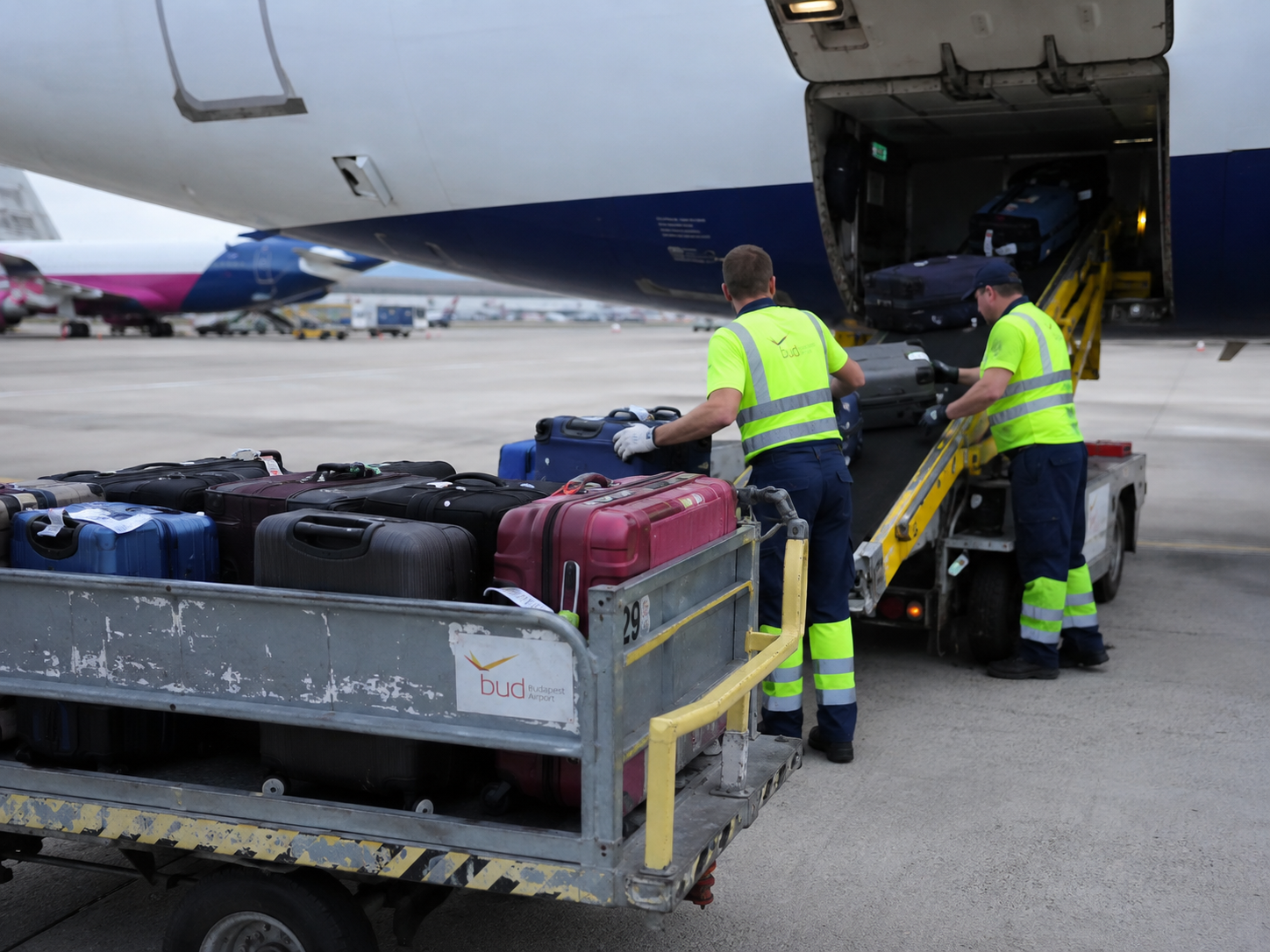
The challenge. Airports may have thousands of CCTV cameras, but baggage handling creates difficult blind spots. Fixed cameras cannot always capture what happens around aircraft cargo doors or inside the cargo hold itself.
Budapest Liszt Ferenc International Airport faced exactly this problem. Despite extensive CCTV and other security measures, the final stages of baggage handling remained difficult to monitor.
The solution. Under a 2024 Hungarian legal framework requiring bodycams for defined baggage-handling activities, ZEPCAM supplied body-worn cameras and video management software to add a mobile evidence layer to the existing CCTV infrastructure.
The implementation followed a GDPR impact assessment and consultation with the Hungarian data protection authority.
In practice. ZEPCAM bodycams are used by ground handling agents performing defined baggage-handling activities around aircraft cargo doors and inside cargo holds. A designated person activates the cameras before handling begins and switches them off when the task is complete.
This means the system records a specific high-risk process rather than continuously monitoring employees throughout their shift.
The result. Official Airport Police Directorate statistics show that investigations in the relevant theft category fell from 41 in 2023 to six in 2024, a decrease of 85.4%. In two separate Hungary-linked cases, bodycam footage also helped identify four suspects.
The figures do not prove that bodycams were the only reason for the decline, but the documented cases show their practical value in closing airport security blind spots.
Read the full Budapest Airport bodycam case to see how the deployment works in practice.
4. Combining live bodycams with airport CCTV
The challenge. Airport control rooms can monitor hundreds of CCTV feeds. That provides an excellent overview, but not always the detail needed when an incident moves away from a fixed camera or develops rapidly on the ground.
The solution. A ZEPCAM T3 Live bodycam gives control-room operators a first-person view alongside existing CCTV, including live video, audio and the location of the wearer. Streams and recordings are protected using security measures including AES-256 encryption.
The objective is not to replace CCTV. It is to extend the airport’s existing surveillance infrastructure into places and situations that fixed cameras cannot follow.
In practice.
- Gate conflict: CCTV shows the wider crowd while the bodycam captures the interaction at ground level, including voices, behaviour and gestures.
- Airside trespass: fixed cameras track movement across the airport while bodycam video and GPS provide close-up information from responding security staff.
- Suspicious baggage: a live-streamed inspection gives senior staff visual information from the scene while the situation is still developing.
The result. Control-room operators can move from overview to first-person detail without losing the wider picture. Recorded CCTV and bodycam footage can then provide multiple perspectives on the same incident.
ZEPCAM explains this approach in more detail in its guide to integrating live bodycams with CCTV for airport security.
5. Sharing incident footage across airport security teams
The challenge. Airports are multi-agency environments. An incident that starts with an airline employee may involve airport security, border control, customs or police only minutes later.
At Schiphol, for example, the airport, Royal Netherlands Marechaussee, Dutch Customs and airlines all operate within the same complex security environment. Different organisations may need access to different information while strict privacy and security requirements remain in place.
The solution. Recorded and live footage can be managed through controlled access, user roles and secure sharing processes. ZEPCAM Manager supports device and user management, auditing, evidence management and integration with other systems.
ZEPCAM is also certified against information-security standards including ISO/IEC 27001. These standards matter because a professional bodycam system involves far more than the camera itself. Video must remain protected during transfer, storage, access, sharing and eventual deletion.
Read more about what ISO certifications for body camera suppliers mean in practice.
In practice. During a serious security incident, evacuation or major passenger disruption, authorised teams can use live and recorded video to build a clearer shared picture of what is happening.
Afterwards, securely managed footage can support incident reviews, investigations and, where appropriate, legal proceedings.
The result. Airport organisations gain faster shared situational awareness while retaining control over who can access sensitive footage and how it is managed.
Bodycams extend airport security beyond fixed cameras
Bodycams do not replace airport CCTV. They extend it to the places fixed cameras cannot reliably follow: moving staff, gates, aircraft stands, cargo holds, inspections and rapidly developing incidents.
The airports getting the most value from bodycams use them for clearly defined situations where a first-person view adds something existing camera infrastructure cannot provide.
The strongest deployments also answer three questions before recording starts:
- Why is the footage being recorded?
- When should the camera be activated?
- Who may view, retain or share the footage afterwards?
Ask where your people work outside the reliable view of your fixed cameras. That is where a bodycam is likely to add the most value.
Want to see how this could work at your airport? Book a demo with a ZEPCAM expert.
Frequently asked questions about bodycams in airports
Why use bodycams in airports if CCTV is already installed?
CCTV provides a fixed overview of terminals, gates and airside areas, but it cannot follow employees everywhere they work. Bodycams add a mobile, first-person perspective in places such as aircraft stands, cargo holds, inspection areas and passenger interactions. They complement CCTV rather than replace it.
Where are bodycams most useful at airports?
Bodycams are particularly useful where staff work outside the reliable view of fixed cameras. Common examples include passenger gates, baggage handling, border inspections, customs checks, airside security patrols and incident response. Live bodycams can also give control-room operators a direct view from the scene.
Can bodycams be used at airports under GDPR?
Yes, bodycams can be used in European airports, but their use must have a clear purpose and appropriate legal basis. Organisations should define when recording is allowed, how long footage is retained, who can access it and how recorded individuals’ privacy is protected. A Data Protection Impact Assessment may also be required depending on the deployment.
Can airport bodycams stream live video to a control room?
Yes. Live-enabled bodycams such as the ZEPCAM T3 Live can transmit video, audio and location information over mobile or Wi-Fi networks. This allows control-room staff to assess an incident remotely and provide frontline employees with faster support.
Are bodycams used for baggage handling at airports?
Yes. Bodycams can be used to record defined baggage-handling processes where fixed CCTV has blind spots, such as around aircraft cargo doors and inside cargo holds. At Budapest Airport, bodycams are used by ground handling staff as an additional security layer alongside existing CCTV. Read the Budapest Airport bodycam case for an example of this approach.