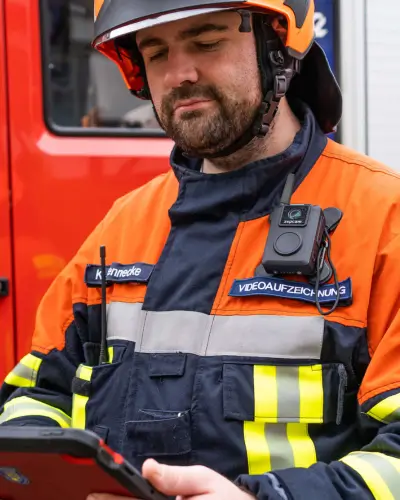

When lives hang in the balance, every second counts. Whether scaling alpine cliffs, battling relentless seas, or navigating congested city streets, rescue teams face unpredictable environments, evolving dangers, and the constant demand for speed, safety and accountability. Increasingly, rescue organisations are embracing body-worn cameras with live streaming as essential tools to enhance coordination, protect responders, and improve mission outcomes.
Why Bodycams Are Revolutionising Rescue Operations
Unlike traditional radios or delayed reports, live bodycam streaming delivers immediate visual context combined with GPS location data. This dual perspective allows command centres and medical control rooms not only to see what responders are facing, but also to know precisely where they are. The integration of live video and precise positioning enables faster and more accurate decision-making, smarter resource allocation, and enhanced safety for both victims and rescuers.
Real-World Rescue Scenarios Where Bodycams Make the Difference
Mountain Rescue
Harsh terrain, sudden weather changes, and weak radio coverage often leave teams isolated. With bodycams, remote experts can see exactly what rescuers see, while GPS coordinates confirm their position. This combination allows specialists to guide safe routes, assess avalanche risks, and direct reinforcements with greater accuracy.
Sea Rescue
Unpredictable waves, strong currents, and poor visibility complicate maritime emergencies. Real-time video streams, supported by GPS tracking, give coordinating centres the ability to redirect vessels, issue alerts, and stage reinforcements with precision.
Urban EMS and Ambulance Services
Blocked traffic, chaotic crowds, and sometimes aggression can delay urgent care. Streaming footage, combined with live location data, offers immediate medical triage for hospital staff and enables rapid dispatch of backup teams, reducing critical minutes from patient care timelines.
Disaster Response and Multi-Agency Incidents
Earthquakes, floods, or large-scale accidents require cooperation across multiple services and often across borders. Bodycams provide a shared visual language and GPS-enabled situational awareness, ensuring interoperable coordination between agencies and nations.
Key Benefits of Bodycams for Rescue Professionals
- Enhanced Situational Awareness: Live feeds combined with GPS location data offer commanders clarity on victim numbers, injury severity, threats, obstacles, and the exact position of teams in the field.
- Rescuer Protection: Cameras deter aggression, provide legal evidence, and document actions for review.
- Training and Improvement: Real-world footage allows teams to identify communication gaps and improve tactics.
- Transparency and Trust: Visible accountability builds public confidence and reduces complaints.
- Efficiency and Cost Savings: Fewer errors, improved coordination, better operational preparation, and a reduction in unjustified claims all contribute to significant time and resource savings.
Overcoming the Challenges
- Data Protection and GDPR: Sensitive footage demands strict compliance with privacy laws, encrypted storage, and role-based access.
- Rugged Hardware: Cameras must survive salt water, shocks, dust, and cold, while offering hands-free mounting for helmets or harnesses.
- Reliable Connectivity via 4G: Remote mountains, offshore waters, and busy city centres can stretch network coverage to its limits. In most countries, 4G LTE provides the widest and most stable network coverage. While 5G is still limited to urban areas and lacks reach in rural or offshore regions, 4G remains the most dependable technology for live rescue operations.
- Clear Protocols and Training: Teams need simple, standardised rules for recording, secure file handling, and maintaining the chain of custody.
ZEPCAM Solutions: Built for the Harshest Missions
- ZEPCAM T3 Live Bodycam: Secure live streaming with GPS and audio over 4G LTE, with remote offloading via 4G or Wi-Fi. Engineered to withstand extreme conditions at sea, in the mountains, or in urban environments, it delivers reliable performance with automatic bandwidth optimisation for stable, low-latency streaming in every mission.
- ZEPCAM T2 Endura Bodycam: Reliable high-quality recording for missions where live streaming is not required, delivering up to 14.5 hours of continuous operation and exceptional night vision performance.
- ZEPCAM T3 Live Minicamera: An add-on camera that connects to the T3 Live bodycam, offering lightweight, flexible mounting for helmets, harnesses or protective gear. Ideal for fully hands-free operation in extreme rescue conditions.
- ZEPCAM Manager Platform: A secure video management platform that supports GDPR compliance with 256-AES encrypted storage, role-based access control, and seamless integration into existing IT infrastructures. Contact our experts for custom advice.
- Docking Solutions: Scalable multi-bay docks for secure offloading, charging, and user ID assignment.
Rescue organisations today face increasing complexity and rising public demand for accountability. Bodycams with secure 4G live streaming are no longer optional; they are mission-critical tools that deliver the visibility, coordination, and trust required to save lives safely and efficiently.
With ZEPCAM rugged, future-proof bodycams, flexible Minicamera options, a broad range of mounting solutions, and a secure management platform, rescue professionals gain more than cameras. They gain clarity, confidence, and control, the ability to make faster, safer, and smarter decisions when every second counts.
Contact our experts today for tailored advice on the best solution for your organisation.