

Why bodycams originally had front screens
When the first generation of bodycams entered the market, most members of the public had never encountered one before.
Manufacturers introduced front-facing screens for a simple reason: to make recording visible. The screen provided reassurance that the device was working and made it obvious that footage was being captured.
At the time, that approach made sense.
Today, bodycams are widely recognised. Whether in law enforcement, public transport, hospitals, city centres, retail environments, or security operations, most people immediately understand what a bodycam is and what it does.
As bodycam adoption increased, organisations started asking a different question:
What operational value does the screen still provide?
For many, the answer became increasingly difficult to justify.
The challenges of front-screen bodycams
What appears useful in a product brochure can create unexpected challenges in real-world situations.
One of the most common issues is distraction.
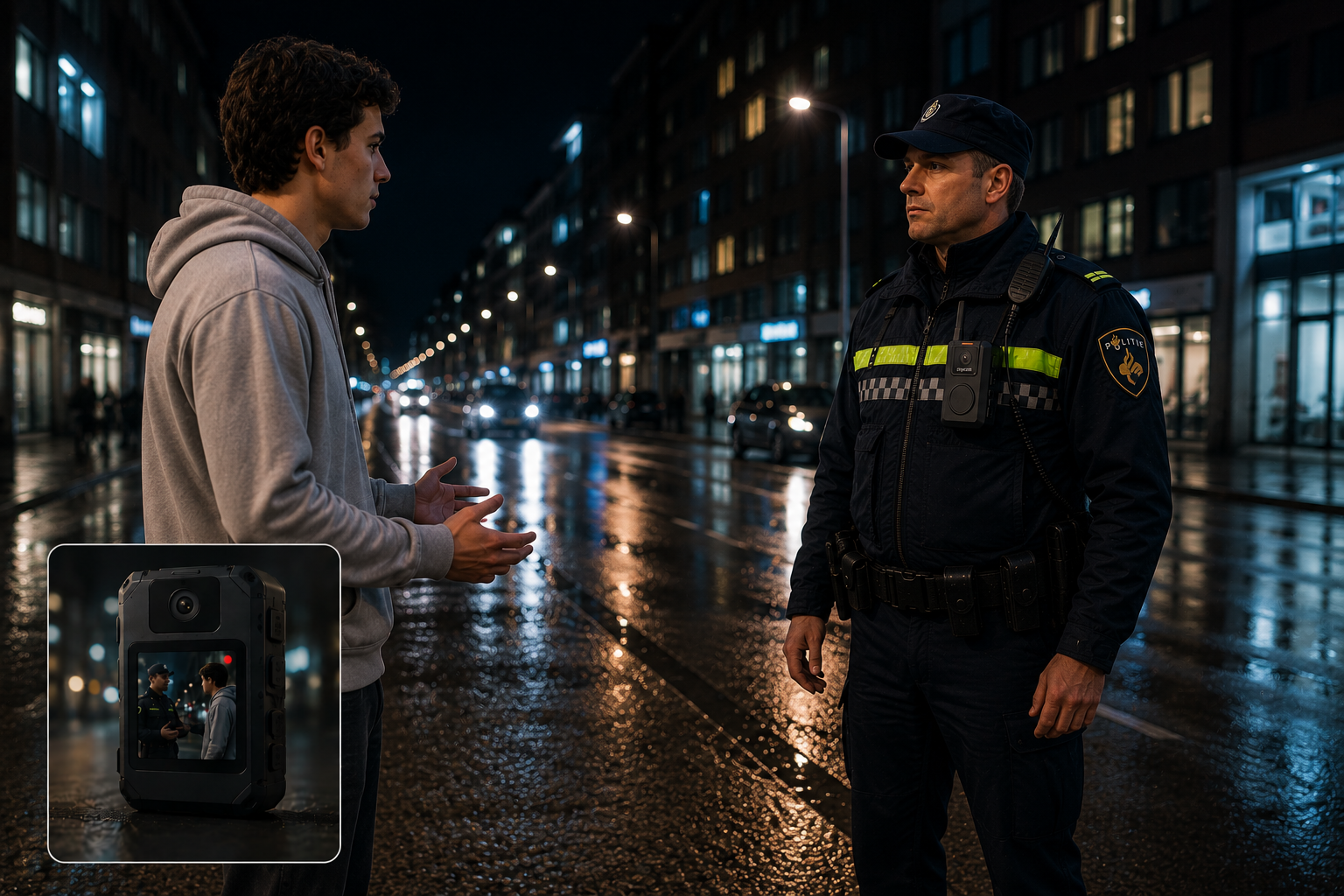
During interactions with members of the public, people naturally become curious about the screen. Instead of focusing on the officer, security professional, or enforcement agent in front of them, attention shifts towards the live image displayed on the device.
In sensitive situations, this can significantly change the dynamics of an interaction.
Whether dealing with vulnerable individuals, mental health incidents, youth interventions, or difficult conversations in healthcare settings, maintaining human connection and eye contact is often important. A screen can unintentionally become the centre of attention.
There is also a safety consideration.
When people notice a live image of themselves, they often move closer to get a better look. What starts as curiosity can quickly reduce personal space and increase the risk of unwanted physical proximity.
For frontline professionals managing potentially volatile situations, encouraging people to move closer is rarely desirable.
Visibility is not always an advantage
Another challenge becomes apparent during evening and night operations.
Security officers, police officers, and enforcement teams often work in low-light environments where visibility matters.
A front-facing screen creates a constant light source. While the light may seem insignificant, it can make an officer more visible from a distance and draw unnecessary attention to their position.
Many organisations have attempted to address this by switching screens off when needed.
In practice, however, this requires officers to remember yet another action during potentially stressful situations.
A screenless bodycam removes that decision entirely.
The device remains discreet by default while still clearly indicating when recording is active.
What modern bodycams do instead
The industry has largely moved away from front-facing screens for a reason.
Modern professional bodycams communicate recording status through LED indicators, vibration alerts, and audio notifications.
The wearer knows when recording starts.
Members of the public can clearly see that the camera is active.
The purpose of the screen is achieved without introducing additional weight, battery consumption, or distraction.
A bodycam does not need a screen to make recording visible. LED indicators and clear activation signals already provide that information while allowing interactions to remain focused on the people involved.
What organisations are seeing
Organisations that have transitioned to screenless bodycams consistently report similar benefits.
Officers and frontline staff often prefer the lighter and more compact design, particularly during long shifts.
Battery life improves because power is not continuously consumed by a display.
Durability increases as there is no screen that can crack or become damaged during daily use or physical confrontations.
Many organisations also report better interaction quality in healthcare, public transport, security, and enforcement environments because people are less distracted by the technology itself.
For teams working in low-light conditions, eliminating the screen removes an unnecessary light source and helps improve operational safety.
Why the industry has moved on
The shift towards screenless bodycams is not a coincidence.
The most widely deployed professional bodycams across Europe and North America no longer include front-facing screens.
This evolution is the result of years of operational feedback from thousands of users working in real-world environments.
As organisations gained experience with bodycam deployments, priorities changed. Reliability became more important than novelty. Operational effectiveness became more important than product features that looked attractive on a specification sheet.
The result is a clear trend towards simpler, more durable, and more practical bodycam designs.
The takeaway
When evaluating a bodycam solution, it is worth looking beyond the feature list.
A front-facing screen may appear to add value, but for most operational environments it introduces additional cost, complexity, distraction, and potential safety concerns without delivering a significant operational benefit.
The original purpose of the front screen was to make recording visible at a time when bodycams were unfamiliar. That is no longer the world we operate in.
Today, professional bodycams are recognised instantly, and modern recording indicators provide all the visibility required.
For most organisations, the question is no longer whether a bodycam should have a front screen.
It is whether there is still a good reason for one at all.