
Across the Netherlands, a quiet yet significant transformation is underway in how local enforcement keeps communities safe. The government has announced a reform that redefines the work of the buitengewoon opsporingsambtenaar (BOA), known in English as the municipal enforcement officer.
These officers play a vital role in maintaining order in public spaces, public transport and nature areas. They respond to nuisance complaints, support the police, and serve as the first point of contact for residents and businesses. Unlike the police, they are unarmed, relying on communication, professionalism and public trust to resolve conflicts.
The reform gives them clearer powers, stronger preventive roles and modern equipment, ensuring that they can operate safely, effectively and with accountability.
Safety is built on trust, not force
Under the new framework, municipal enforcement officers will not only detect and report offences but also prevent and de-escalate them. They will be able to intervene earlier, for example, by separating people or asking individuals to leave an area, even when a fine or report is not yet necessary. This shift strengthens prevention and reduces hesitation in the field.
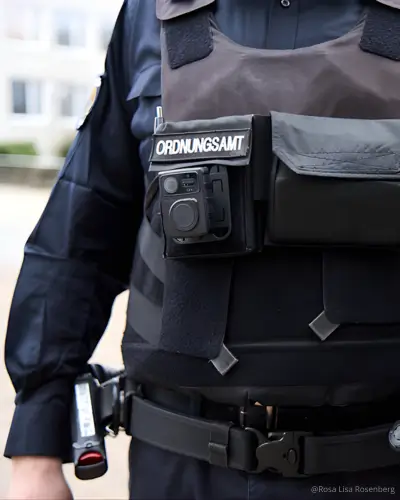
To support this responsibility, the reform introduces a standard equipment set that fits their duties. Every officer will carry a radio and handcuffs to ensure effective communication and cooperation with colleagues and fellow police officers. Where needed, they may also be equipped with a bodycam, a protective vest, or, under strict conditions, a short baton or pepper spray for self-defence.
Firearms will remain excluded from their standard equipment, except in rare, remote situations where green enforcement officers (nature wardens) work far from police support. The principle is clear: municipal officers must prioritise withdrawal over confrontation and leave the use of force to the police.
A European shift toward professionalism and accountability
The Netherlands is not alone in rethinking how unarmed public enforcement operates. Across Europe, municipal enforcement officers are being equipped and empowered to act with authority through visibility and transparency rather than through force.
In Germany, the Kommunaler Ordnungsdienst (KOD) uses body-worn cameras to reduce aggression and support evidence-based enforcement. Evaluations in cities such as Frankfurt and Mannheim indicate a decline in assaults and an increase in public confidence.
In the United Kingdom, community wardens and local government officers report similar results, with fewer verbal confrontations and complaints once cameras were introduced. In the Nordic countries, parking and municipal inspectors have also found that cameras make interactions calmer and safer.
These examples reflect a shared European approach: strengthening unarmed enforcement through trust, professionalism and technology.
Technology as a form of authority
For unarmed officers, authority is earned through presence, communication and fairness. The body camera reinforces these values by providing a factual, objective record of events. It supports officers in their work, deters aggression, and ensures accountability for both public servants and citizens.
Used responsibly, the bodycam is not about surveillance; it is about mutual protection. It allows incidents to be reviewed transparently, supports learning and training, and builds confidence between the public and those who serve them.
A model for modern governance
The Dutch reform reflects a broader truth: public safety in democratic societies depends on trust as much as on control. By clarifying the role of municipal enforcement officers, expanding their preventive powers and providing them with the right tools, the Netherlands is building a system that prioritises cooperation, professionalism and transparency.
This is not about giving unarmed officers more power; it is about giving them the means to perform their work safely and responsibly. It shows how modern governance can protect both citizens and those who serve them, not through confrontation, but through confidence.
Across Europe, that message is gaining momentum: trust is the foundation of safety, and visibility is the strongest form of authority.
How ZEPCAM Supports Public Safety
At ZEPCAM, we support hundreds of cities and their municipal enforcement officers across Europe with reliable bodycam and video management solutions. Together, we help public professionals stay safe, act transparently and strengthen the trust of the communities they serve.
Would you like to learn more about how ZEPCAM can support your organisation’s safety and accountability goals? Consult with our experts to learn how ZEPCAM bodycams help protect your staff and foster public trust.