

Executive summary
Airport baggage handling, also known as luggage handling, had a persistent security challenge at Budapest Liszt Ferenc International Airport: theft. CCTV, patrols, covert surveillance, hidden cameras and decoy suitcases were already in use, but one operational blind spot remained: the final baggage-handling process, including loading and unloading, around aircraft cargo doors and inside cargo holds.
In 2024, Hungary introduced a legal framework requiring bodycams for defined baggage-handling activities. ZEPCAM supplied the body-worn cameras and supporting video management software, adding a mobile perspective to the airport’s existing security infrastructure. The system was tested from February and moved into operational use during the summer. [1][2]
Official full-year statistics from the Airport Police Directorate show that investigations ordered in the category labelled “theft from checked baggage and delivery” fell from 41 in 2023 to six in 2024, a decrease of 85.4%. [1]
Case at a glance
| Challenge | Recurring baggage theft and limited visibility during the final aircraft-side baggage-handling stage. |
| Solution |
ZEPCAM bodycams with supporting video management software, complementing fixed CCTV. |
| Use case |
Ground handling agents performing defined baggage-handling activities around aircraft cargo doors and inside cargo holds. |
| Governance |
Task-based activation, image recording, controlled use and normally 30-day deletion, with defined legal exceptions. |
| Measured result |
41 relevant investigations in 2023 versus six in 2024: an 85.4% decrease in the official full-year category. |
| Evidence value |
Police reported that bodycam footage identified four suspects across two Hungary-linked cases in 2024. |
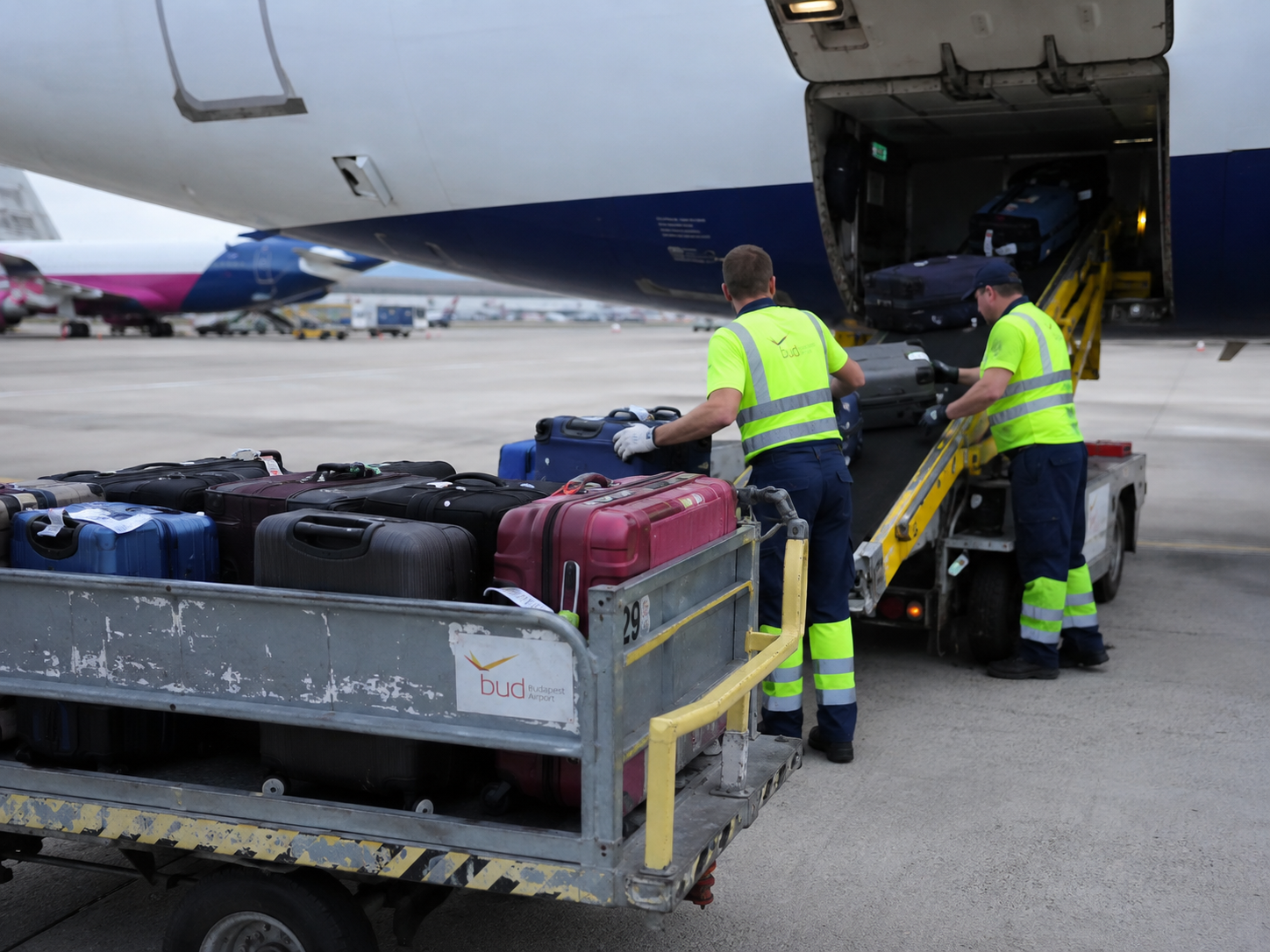
The challenge: CCTV could not see the entire baggage-handling process
Budapest Airport already had extensive CCTV coverage. The limitation was not the number of cameras, but their perspective. Baggage moves through several controlled environments before it reaches an aircraft, and fixed cameras cannot always provide a clear view of work performed close to aircraft or inside confined cargo holds.
The Hungarian National Authority for Data Protection and Freedom of Information (NAIH) independently confirms this blind spot in its 2023 annual report: although the airport was covered by CCTV, the system could not oversee aircraft loading areas where unauthorised baggage opening could occur. Fixed-camera alternatives also raised flight-safety and operational risks, including potential aircraft damage and delays. [4]
The Airport Police Directorate was also using unpredictable patrols, covert measures, hidden cameras and decoy luggage. Despite those controls, police reported 119 baggage-theft reports in 2022 and 78 in 2023. [2]
Fixed CCTV monitors a location. A bodycam documents the task where it actually happens.
The solution: airport bodycams at the point of work
Budapest Airport prepared a GDPR Article 35 data protection impact assessment and requested prior consultation with NAIH. Based on that assessment, NAIH reports that bodycams proved the most secure and reliable of the examined solutions that did not jeopardise flight safety, compared with mobile or additional fixed cameras. [4]
ZEPCAM was selected for its robust bodycam solution, its position as a European supplier, its cloud-based video management platform, and the quality of its service and support. These factors were particularly relevant in an airport environment where equipment and evidence workflows need to perform reliably in daily operations.
ZEPCAM bodycams and video management software added a mobile evidence layer to the existing security setup. They did not replace CCTV. Instead, they extended visibility into the parts of the baggage-handling process that fixed cameras struggled to capture.
For investigators, this creates a closer evidential view of the task itself. When a passenger reports a missing item, video from the baggage-handling process can help establish what happened, who was present and, in some cases, where the theft did not occur.
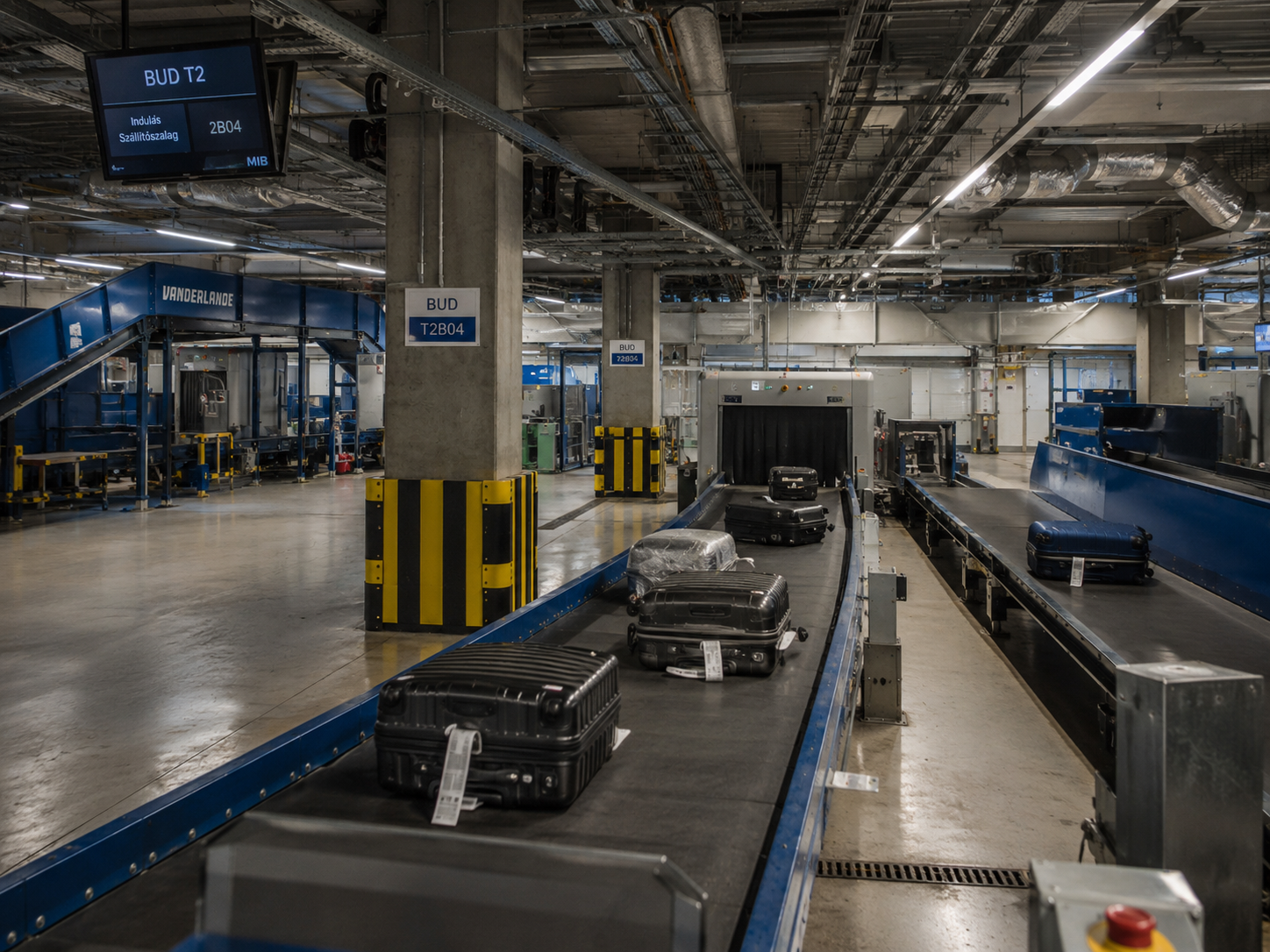
How the bodycams are used
Section 67/B of Hungary’s Air Transport Act defines the permitted use of bodycams for licensed ground-handling operations. In practice, the ZEPCAM bodycams are used by ground handling agents carrying out the defined baggage-handling activities. Recording is tied to baggage-handling operations in the immediate vicinity of aircraft, around cargo hold doors and inside cargo holds. A designated responsible person activates the cameras before the handling process begins and switches them off when the task is complete. [3]
This matters operationally and legally: the cameras are used for a specific high-risk process rather than as continuous workplace surveillance.
The principle is simple: effective bodycam deployment is not about recording as much as possible. It is about capturing the right evidence, for a defined purpose, under clear rules.
Measured results: 85.4% fewer relevant investigations in 2024
The clearest full-year comparison is contained in the Airport Police Directorate’s official January–December 2024 statistics. Under the category “theft from checked baggage and delivery”, the number of theft investigations ordered fell from 41 in 2023 to six in 2024. The Directorate itself records the change as −85.4%. [1]
A separate police update published on 16 September 2024 reported seven criminal proceedings concerning baggage theft. In five, investigators could rule out Hungary as the place of theft. In the other two, bodycam footage helped identify two suspects per case; all four were questioned as suspects. [2] The seven proceedings are not an interim version of the six investigations in the full-year statistics: they use a different reporting period and statistical category and are not directly comparable.
What the results show, and what they do not
The statistics show a substantial decline during the year bodycams were introduced, but do not establish that bodycams were the sole cause. Other security measures and operational or reporting factors may also affect year-on-year figures.
The strongest direct evidence is therefore the documented cases in which bodycam footage helped identify suspects or exclude Hungary as the location of the theft, alongside the broader statistical decline.
Business value beyond deterrence
The case demonstrates three forms of operational value beyond aviation:
- Close mobile blind spots. Body-worn video follows the task into locations that fixed infrastructure cannot reliably cover.
- Improve investigations. Video can help establish what happened, identify people involved and narrow down where an incident occurred.
- Strengthen governance. Task-based activation, controlled access, retention rules and secure video management make the camera part of an accountable evidence process rather than a standalone device.
The same principle applies wherever critical work moves beyond fixed-camera coverage, from logistics and public transport to security, healthcare and field services.
Better visibility where the work happens
Budapest Airport already had extensive surveillance. The remaining problem was a specific blind spot during aircraft-side baggage handling.
ZEPCAM bodycams and video management software extended evidence coverage to that point of work. In 2024, the relevant police investigation category fell from 41 to six, while separate reporting documented bodycam footage supporting suspect identification and location assessment. [1][2]
Do not only ask where you need another camera. Ask where the work moves beyond the view of the cameras you already have.
Improve operational visibility with ZEPCAM
ZEPCAM combines professional bodycams with secure video management software to help organisations capture, manage and use video evidence where fixed camera infrastructure reaches its limits.
Explore ZEPCAM bodycam solutions for high-security and operational environments.
Sources and evidence
[1] Airport Police Directorate, January–December 2024 statistics — 41-to-6 comparison and −85.4% change.
[2] Hungarian Police, 16 September 2024 — reports, deployment timeline and seven 2024 proceedings involving bodycam evidence.
[3] Hungary, Air Transport Act, Section 67/B — recording scope, activation and retention rules.
[4] NAIH, Annual Report 2023, section II.5.2, case NAIH-3773/2023 — CCTV blind spot, alternative solutions, DPIA and prior consultation.